From Nursery Rooms to Nursing Homes: Countless "Fungal Spores" Are Threatening Everyone's Respiratory Tract
The Mold That Never "Left"
In recent years, respiratory health has gradually drawn widespread attention. When choosing a kindergarten, many parents not only focus on the teaching staff, but also strictly evaluate environmental hygiene indicators. As modern people’s understanding of environmental hygiene reaches a higher level, this pre-enrollment inspection has gradually upgraded from simply checking "whether it looks clean" to a comprehensive scrutiny of "visible details" and "invisible hazards".
It is not only the hygiene conditions of kindergartens that face greater challenges. As modern people value a clean and comfortable living experience, nursing homes, hospitals, hotels, and rental properties must all undergo rigorous hygiene inspections. Especially in places open to immunocompromised populations such as young children, the elderly, and patients, sanitation and cleaning must be thoroughly implemented.
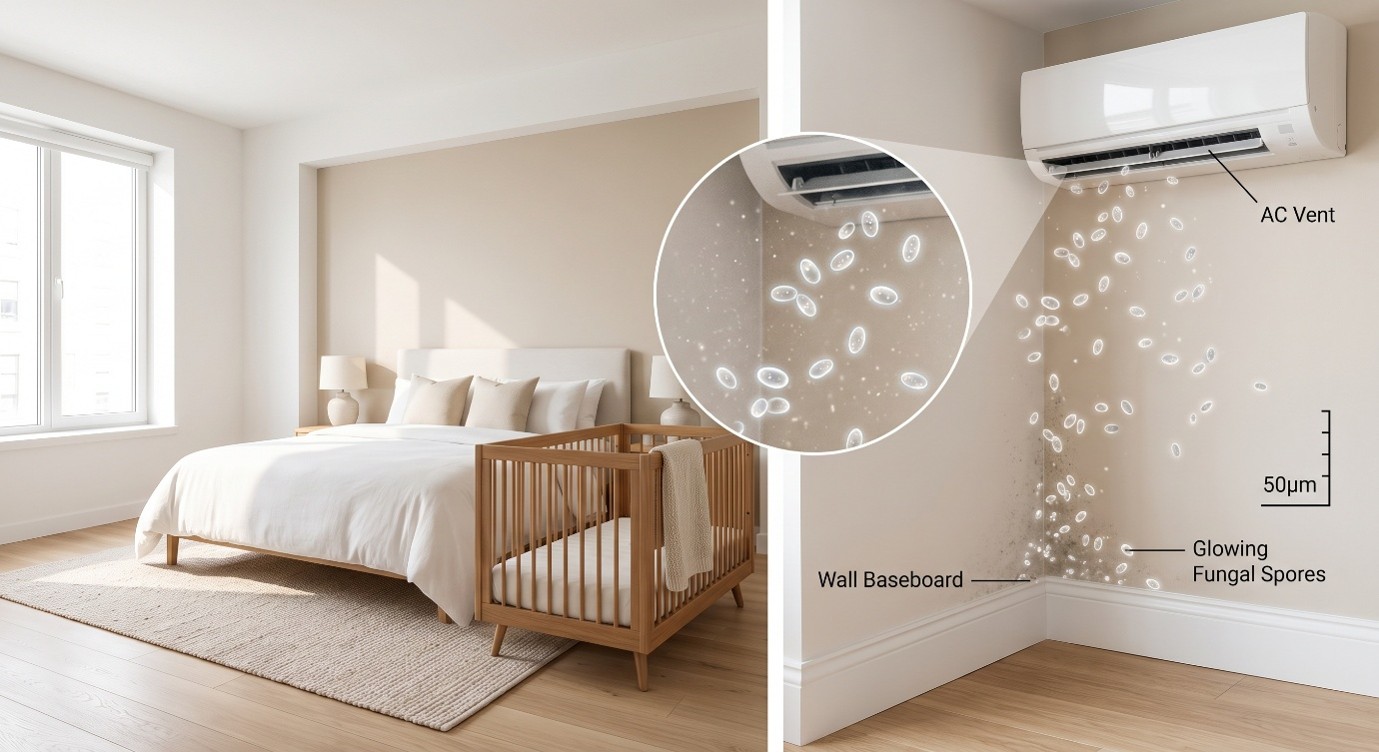
Many families often only focus on surface cleanliness, such as whether there is dust, stains, grease, or hair on floors, desktops, and windowsills, while ignoring hygiene blind spots, air vents, and the mold spores scattered into the indoor air. In humid regions (such as Southern China, coastal areas, and during the plum rain season or "Plum Rain / Return of South Wind" periods), relative humidity often remains above 70%–90%, which is precisely the "golden comfort zone" for mold growth and reproduction.
When room moisture is excessive, mold can grow anywhere, such as on walls, floors, carpets, and furniture. Many corners that seem to just have hard-to-clean dust and stains are actually breeding grounds for mold; what you assume is dust is actually the mycelium of certain molds.
Mold's reproductive ability is terrifyingly strong, capable of achieving explosive, exponential growth in a short time without complex conditions. A mature mold colony can produce hundreds of millions of tiny spores in just a few days. Furthermore, mold spores are extremely small—much finer than visible dust. They can easily disperse to every corner of a room with airflow, clothing friction, pet movement, and even human breathing. By the time a hygiene blind spot is discovered, mold spores have already scattered into the room's air, ready to attack the occupants' respiratory tracts at any moment.
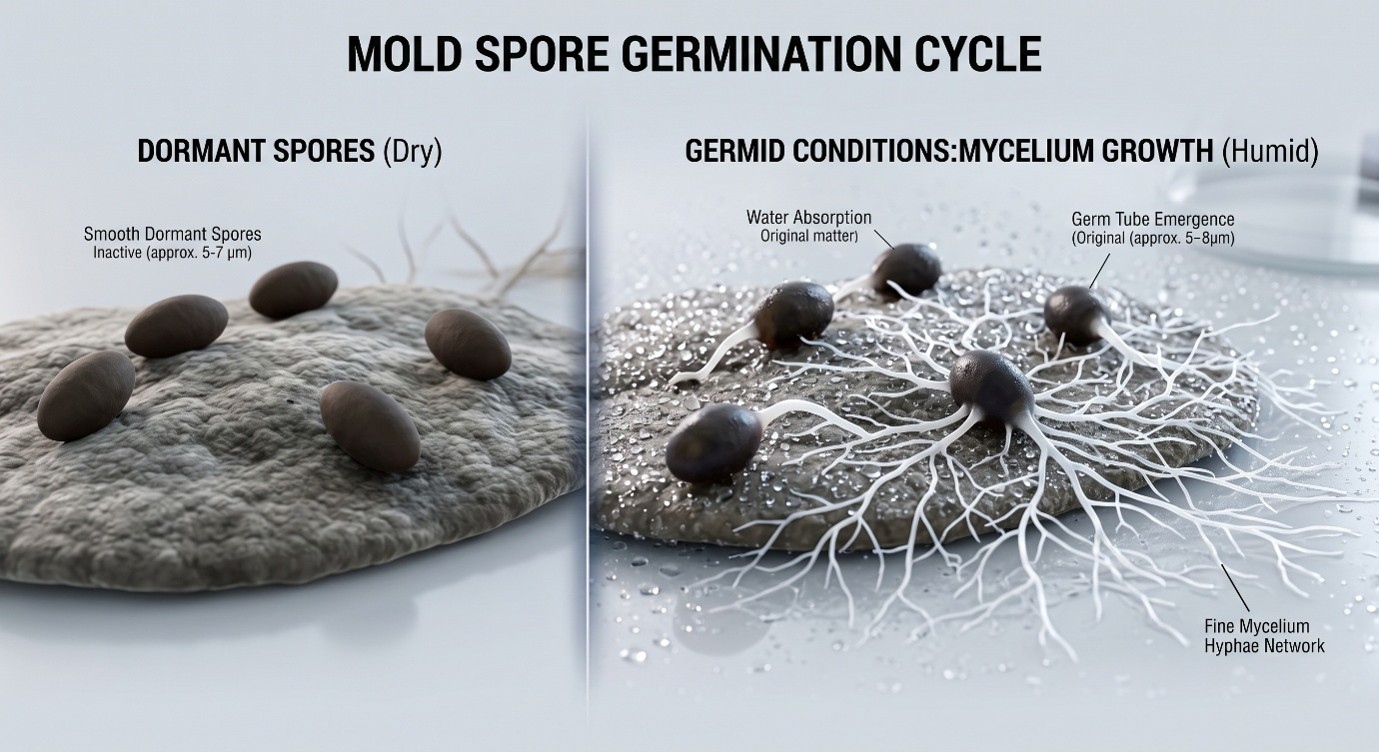
Can we get rid of mold when winter arrives with cold, dry weather? In fact, when humidity drops below 50% or in extreme cold, mold does not die. Instead, it transforms into dormant spores capable of enduring drought, low temperatures, and even some chemical disinfectants, surviving for months or even years in dry environments. As soon as environmental humidity recovers to over 60%, they instantly revive and reproduce explosively. This is the main reason why many families find mold outbreaks recurring as soon as the plum rain season hits.
How Does Mold Destroy Our Health?
Long-term exposure to a moldy environment increases health hazards exponentially. Tiny mold spores, mycotoxins, and volatile organic compounds (MVOCs, i.e., the moldy smell) can enter the human body through inhalation, skin contact, and ingestion, serving as weapons used by mold to attack the human immune defense system.
For people with weaker immunity or allergic constitutions, the most common effect is the induction and aggravation of allergic reactions. After inhaling mold spores suspended in the air, the immune system recognizes them as "invaders," triggering allergic rhinitis and causing patients to sneeze frequently, have a runny nose, nasal congestion, throat discomfort, and coughing. If spores settle on the eyes or skin surface, they can lead to conjunctivitis and hives, or even worsen existing eczema.
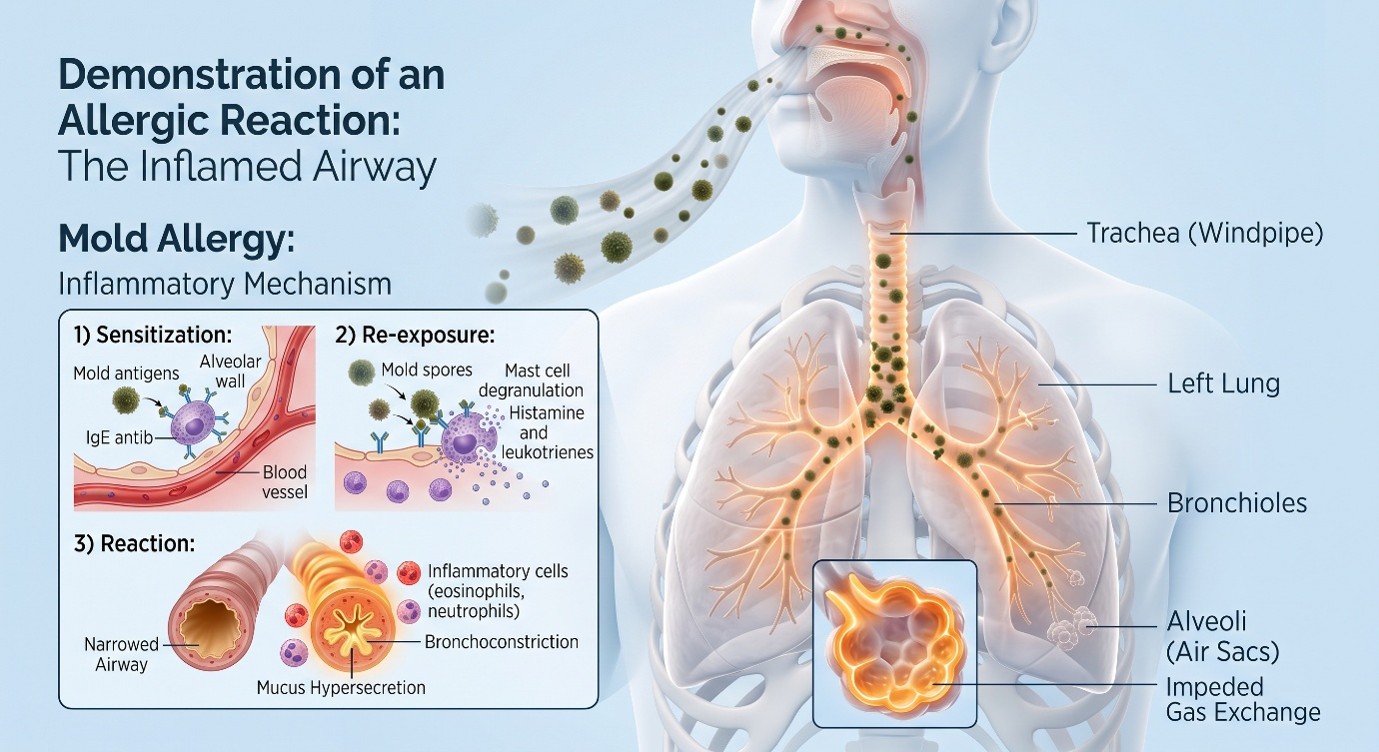
For some allergic individuals, especially children, inhaling mold spores is highly likely to induce or aggravate asthma, leading to bronchospasm, wheezing, chest tightness, and acute breathing difficulties. There are also cases where long-term inhalation of high concentrations of mold spores has caused extrinsic allergic alveolitis (hypersensitivity pneumonitis), with infected individuals suffering from recurrent fevers, dry coughs, shortness of breath, and declining lung function.
The foul moldy smell we encounter daily also affects human health to a certain extent. Volatile mycotoxins emitted by mold are irritants; long-term exposure to such air can cause symptoms like chronic headaches, dizziness, and nausea. Moreover, mycotoxins can be absorbed through the respiratory tract; even long-term, low-dose exposure can suppress normal immune system function, making residents susceptible to colds or other viral infections.
Severely immunocompromised groups (such as advanced elderly individuals, newborns, chemotherapy patients, organ transplant recipients, or patients on long-term steroid medications) face an even more lethal threat from mold—invasive fungal infections. When certain specific mold spores, such as Aspergillus, fall into the lungs, they can "take root and sprout" within lung tissue, causing pulmonary aspergillosis, and may even spread through the bloodstream to the brain or the entire body, threatening life.
Therefore, the harm mold causes to the human body is a progressive process—from superficial skin allergies and respiratory inflammation, gradually accumulating into chronic systemic depletion and even severe, life-threatening infections. As the groups most vulnerable to serious harm from mold, the elderly, children, pregnant women, asthma sufferers, and allergic individuals must be even more cautious when selecting and cleaning their residences.
How to Accurately Assess Mold Contamination in a Room?
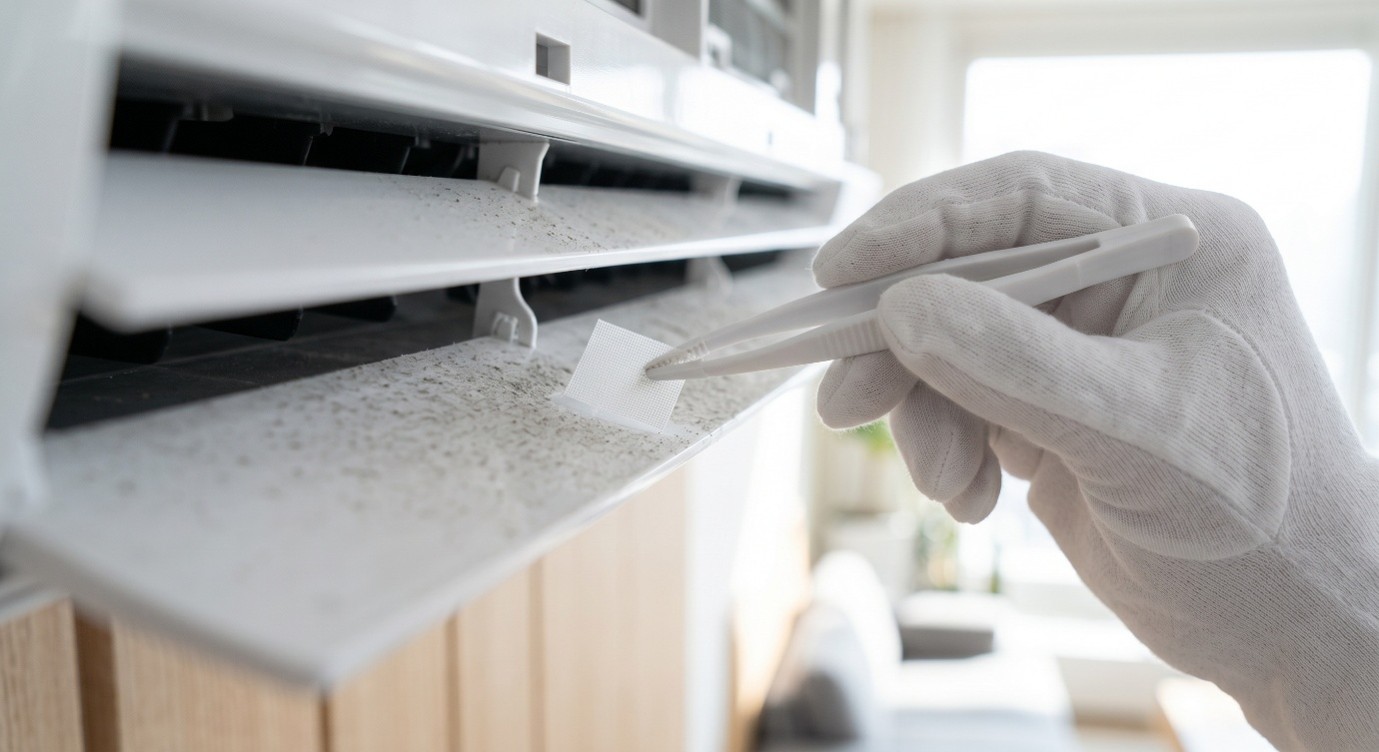
Assessing the presence and severity of mold contamination in a room cannot rely solely on "judging with the naked eye whether there are mold spots" or "smelling with the nose for a moldy odor". To achieve an accurate assessment—especially for public institutions with extremely high hygiene and environmental requirements, such as hotels, nursing homes, hospitals, and kindergartens—it is necessary to establish a standardized evaluation system that includes data-driven, quantified risk level assessments.
Testing mold spores by swabbing dust and stains from corners is currently a highly practical and efficient technical method for environmental health screening. Decode Cure, a Hong Kong technology innovation enterprise, introduced SporeIQ, a mold testing product that simplifies complex laboratory sampling into everyday swabbing, helping users quickly obtain comprehensive, data-driven mold testing and risk assessment reports.
SporeIQ focuses on toxic and infectious mold populations. It can be applied to areas where obvious mold spots are invisible to the naked eye but where hidden mycelium and spores easily accumulate—such as air conditioner vents, bathroom silicone strips, wall baseboards, wardrobe backboards, sofa crevices, and under carpets. Furthermore, it is simple to operate and requires no technical expertise. Just like routine cleaning, users can complete sample collection by gently swabbing the target area with a specialized sampling swab. Both ordinary household users and janitorial staff can operate it easily, saving the high costs and cumbersome procedures of hiring third-party testing agencies.
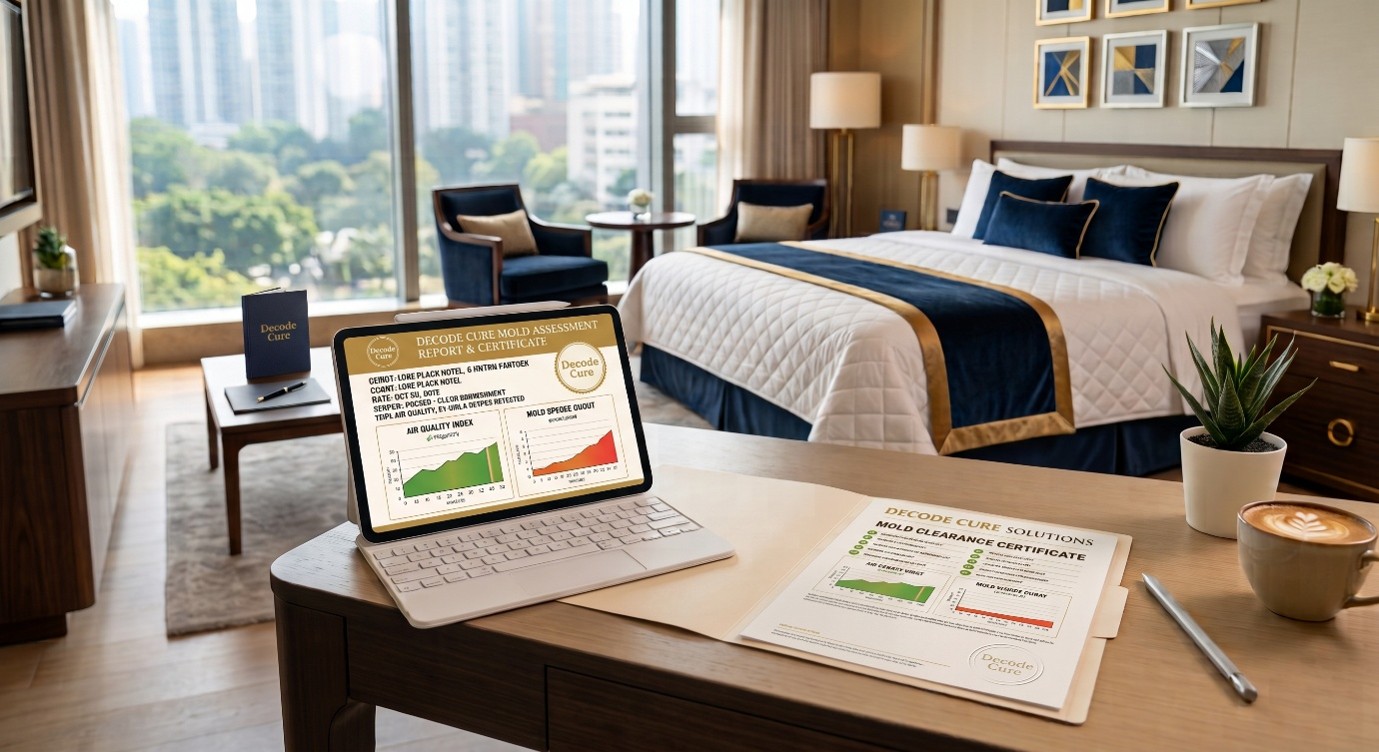
When a household includes infants, pregnant women, the elderly, or patients with asthma or allergies, SporeIQ can also be used to screen for hidden allergen hazards in core living spaces such as children's rooms and bedrooms. For public places like hotels, hospitals, nursing homes, and kindergartens, we recommend SporeIQ's upgraded package. In addition to the original test report, it can issue an official testing certificate for the premises, and offers discounted comparison testing after deep cleaning, dehumidification, or the use of mold removers—using intuitive data to prove to clients and parents that the environment is truly "mold-free and worry-free".
SporeIQ transforms invisible mold contamination from a matter of "out of sight, relying on feeling" into "visible, data-backed" precision protection and commercial trust. It breaks the passive pattern of traditional mold prevention—where action is taken only after mold spots appear—and assists in creating mold-free, reassuring living environments through convenient, fast, accurate, and efficient testing.
References
1. World Health Organization. Regional Office for Europe (2009). WHO guidelines for indoor air quality: dampness and mould. World Health Organization. Regional Office for Europe. https://iris.who.int/handle/10665/164348
2. Hughes KM, Price D, Torriero AAJ, Symonds MRE, Suphioglu C. Impact of Fungal Spores on Asthma Prevalence and Hospitalization. Int J Mol Sci. 2022 Apr 13;23(8):4313. doi: 10.3390/ijms23084313. PMID: 35457129; PMCID: PMC9025873.
3. Cerimi K, Jäckel U, Meyer V, Daher U, Reinert J, Klar S. In Vitro Systems for Toxicity Evaluation of Microbial Volatile Organic Compounds on Humans: Current Status and Trends. J Fungi (Basel). 2022 Jan 13;8(1):75. doi: 10.3390/jof8010075. PMID: 35050015; PMCID: PMC880961.
4. Fisk WJ, Lei-Gomez Q, Mendell MJ. Meta-analyses of the associations of respiratory health effects with dampness and mold in homes. Indoor Air. 2007 Aug;17(4):284-96. doi: 10.1111/j.1600-0668.2007.00475.x. PMID: 17661925.
5. Patterson TF, Thompson GR 3rd, Denning DW, Fishman JA, Hadley S, Herbrecht R, Kontoyiannis DP, Marr KA, Morrison VA, Nguyen MH, Segal BH, Steinbach WJ, Stevens DA, Walsh TJ, Wingard JR, Young JA, Bennett JE. Practice Guidelines for the Diagnosis and Management of Aspergillosis: 2016 Update by the Infectious Diseases Society of America. Clin Infect Dis. 2016 Aug 15;63(4):e1-e60. doi: 10.1093/cid/ciw326. Epub 2016 Jun 29. PMID: 27365388; PMCID: PMC4967602.